
Home Plumbing Checklist
Fourteen checks that catch the expensive problems while they are still cheap. The whole list is on this page - print it or save it as a PDF straight from your browser.
- 1
Find your water meter isolation tap and make sure it turns
In a burst-pipe emergency this is the tap that saves your house - seized taps are discovered too late.
Once, then yearly
- 2
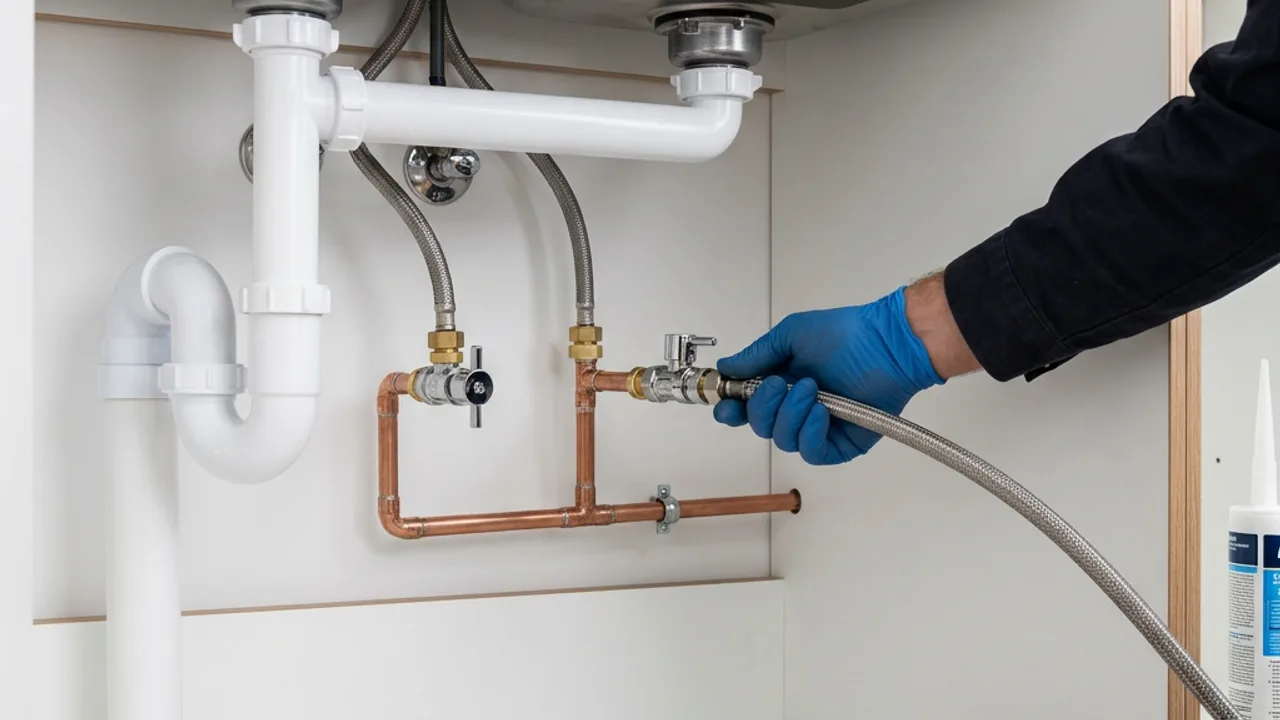
Check every braided flexi-hose under sinks and behind toilets for bulging, rust or fraying
Burst flexi-hoses are a leading cause of home water-damage insurance claims in Australia.
Every 6 months
- 3
Run the hidden-leak meter test: everything off, watch the meter for 15 minutes
A moving meter with everything off means a hidden leak running up your bill and damaging the house.
Every 6 months
- 4
Lift the hot water system's temperature-pressure relief (TPR) valve lever briefly
A seized TPR valve turns a faulty cylinder into a pressure hazard - it must release freely.
Every 6 months
- 5
Look for rust weeping or water pooling at the base of the hot water unit
A cylinder leaks from the base before it fails outright - catching it early means a planned replacement, not an emergency.
Monthly
- 6
Have the sacrificial anode checked on storage hot water units over three years old
In hard-water areas like Tynong and the southern flats the anode is consumed faster - replacing it doubles cylinder life.
Every 2-3 years
- 7
Clean gutters and check downpipes discharge away from the house
Overflow rots fascias, floods garages and undermines footings - the top roof-plumbing call in the leaf-heavy hills suburbs.
Autumn and spring
- 8
Know how to isolate your gas - at the meter, or at the bottles on LPG (bottled gas) properties
A gas smell means isolate first, ventilate, then call - fumbling for the valve wastes the minutes that matter.
Once, then yearly
- 9
Put a few drops of food colouring in the toilet cistern and wait 15 minutes without flushing
Colour in the bowl means a silent cistern leak - thousands of litres a year straight down the drain.
Yearly
- 10
Check under every sink for moisture, swelling cabinet bases or musty smells
Slow trap and hose leaks rot cabinetry and feed mould long before they drip visibly.
Monthly
- 11
Note any drain that runs slow or gurgles, and act before it blocks
A slow drain is a blockage forming - clearing it early costs a callout, clearing it late can cost a CCTV (drain camera) inspection and repair.
As noticed
- 12
Verify your plumber's VBA (Victorian Building Authority) registration before any work starts
Plumbing is a licensed trade in Victoria - registration is your protection, and the contractor provides their details in the written quote.
Every job
- 13
Collect the compliance certificate after qualifying work - all gas work, most drainage and HWS (hot water system) installs
The certificate is your proof for insurance claims and resale that the work was done to standard.
Every qualifying job
- 14
Keep every written quote and invoice filed with the property records
Warranty claims, insurance disputes and pre-sale building inspections all run on this paperwork.
Always
Method: How This Plumber Pakenham Checklist Works
What this checklist is. Fourteen homeowner-safe checks drawn from Victorian plumbing licensing rules and published maintenance guidance. Each item is something you can look at, touch or time yourself - no tools beyond a torch and food colouring, nothing that requires opening pipework or touching gas fittings.
What it is not. It is not a plumbing inspection, not a diagnosis, and not a substitute for a licensed plumber. Anything involving gas, drainage openings or hot water repairs is licensed work in Victoria and stays with the contractor.
Assumptions. The cadences assume a typical Pakenham-area house on mains water and either mains gas or bottled LPG. Properties on tank water, septic or with older galvanised pipework need a shorter cycle on the hose, anode and gutter items.
Sources. Item content is anchored to VBA (Victorian Building Authority) licensing and compliance-certificate rules, Energy Safe Victoria gas-safety guidance, and insurer-published water-damage claim data on braided flexi-hoses.
Plain-English glossary. VBA - Victorian Building Authority, the body that registers and licenses plumbers. TPR valve - temperature-pressure relief valve, the safety lever on a hot water system. HWS - hot water system. LPG - liquefied petroleum gas, the bottled gas used where mains gas is not connected. CCTV - a drain camera inspection, where a camera is fed through the pipe to find blockages and breaks without digging.